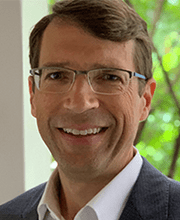

J. Russ Snider joined Tronox in April 2019 as part of the Cristal acquisition. He leads a team of Marketing professionals and is responsible for global marketing strategy, margin improvement, segment portfolio optimization, new product direction, product promotions and branding. He has 25 years of titanium dioxide experience including international assignments in Switzerland and the Netherlands. He previously held roles in Sales, Sales and Operations Planning, R&D and Engineering. Mr. Snider holds a B.S. in Chemical Engineering from the University of Tennessee.
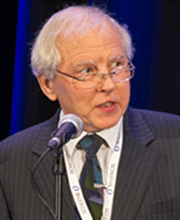

Reg Adams compiles and edits two periodicals, the monthly Focus on Pigments and the quarterly TiO2 Worldwide Update, both of which were launched in 1993. He is also the author or co-author of nine books on the topics of the titanium value-chain, the carbon black industry and iron oxide pigments. In addition, he often carries out consultancy assignments and serves as an expert witness in matters of commercial litigation. He is a Forum Manager and regular contributor for the TiO2 Group on the Linked-In platform and he has been a speaker or chairman at more than 60 specialist conferences around the world covering paints, pigments or minerals. Prior to establishing Artikol, his own consultancy, database and publishing business, he studied Chemistry & Economics at Birmingham University, gained a post-graduate business degree from Bristol University and then worked for Amalgamated Metal (a mining finance house), BSC (publishers, specialising in the fertiliser and chemical industries) and Metra (management consultants, advising on pharmaceuticals and specialty chemicals).


Mark Hosford has over 25 years' professional toxicology experience, specialising in regulatory toxicology and risk assessment. Through his career, Mark has worked for consultancies, industry, and a UK government agency. Since 2017, Mark has been working as a toxicology consultant and contractor and in 2024 was appointed as the Science Programme Manager for the Titanium Dioxide Manufacturers Association (TDMA) and the Titanium Dioxide Industry Consortium (TDIC). Mark is a UK and European Registered Toxicologist, former Chair of the UK Register of Toxicologists, and a member of the Royal Society of Chemistry's Toxicology Group Committee.
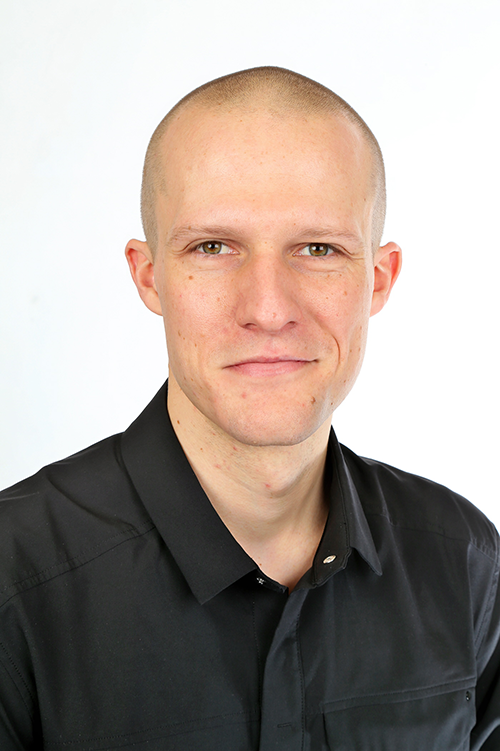

Franz holds a PhD in aerosol particle science from ETH Zurich. Before co-founding femtoG with his colleague and climbing partner, he spent years measuring airborne particles in the lab. Over the years, he developed a personal grudge against the improper use of particle-size measurements, whether it is assuming that every particle is a sphere or looking for single nanoparticles in every powder. He channels that grudge into building better particle analyzers and educating people on how heavy a single particle is.
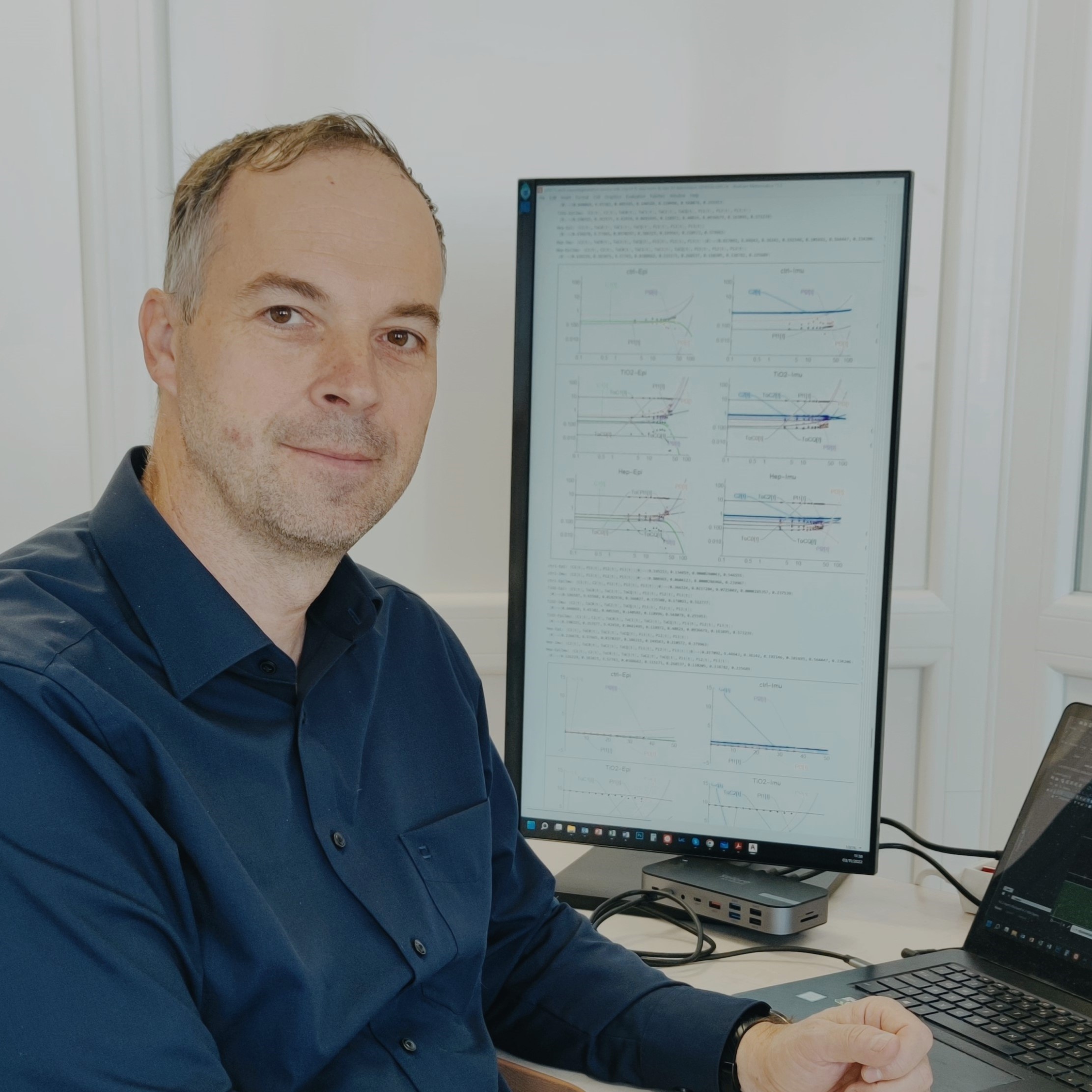
Janez Štrancar has defended his PhD in Molecular Biophysics in 2000 and led the Laboratory of Biophysics at Jozef Stefan Institute in Slovenia from 2006 till end of 2025. He was also engaged at various universities in Slovenia, France and Netherlands delivering courses in Molecular biophysics and Physical measurement. His primary research focus was understanding molecular processes in living cells while developing advanced spectroscopic and microscopic techniques to answer the toughest questions. From this also the Infinite company stemmed out as a Jozef Stefan Institute spin out, at which Janez Štrancar is leading the developing of advanced platforms to predict evolution of slowly evolving disease, so-called in-vitro-learned digital twins.


Lisa Clapp is the Vice President of Colors Technology at Sun Chemical Corporation with responsibility for research and development of pigments and pigment preparations.
Lisa did her undergraduate work in chemistry at Ball State University and received her Master’s of Science degree in Physical Chemistry from the University of North Carolina- Chapel Hill.
Lisa has worked for Sun Chemical for 23 years, where she has held numerous positions, including physical chemist, group leader, Six Sigma Black Belt, Design for Six Sigma Leader, and project manager covering a wide range of Sun Chemical pigment and preparation products.


Dr Richard Parker is Head of Research and Development at Sparxell. He spent 10+ years at the University of Cambridge (UK) developing structurally coloured cellulose materials prior to Sparxell spinning out. He is an expert in the self-assembly of novel material architectures within microfluidic droplets; ranging from supramolecular microcapsules and gels, to photonic microparticles and films. He also developed cutting edge optical characterisation and devices within a UK-based space start-up.
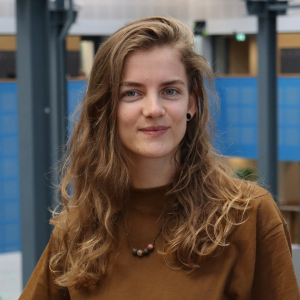

Dr. Clarice Risseeuw is a postdoctoral researcher at Delft University of Technology and a biodesign engineer at Foamlab B.V. Over the past several years, she has investigated structurally coloured Flavobacteria through doctoral research within TU Delft's Faculty of Industrial Design Engineering, exploring the design potential of their vivid living colour in interaction design. As part of the ChromoFlavo consortium, she continues this work during her postdoctoral research, while at Foamlab B.V. she focuses on the development and scale-up of biofabricated materials using cellulose-producing bacteria.
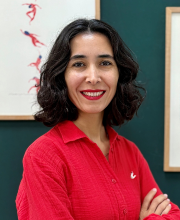
Merve Samiye Kirazlı is the Colour R&D Laboratory Manager at Kansai Altan, where she leads colour development and innovation activities across automotive and industrial coatings. She holds a BSc in Chemical Engineering from Middle East Technical University and an MSc in Chemical Engineering from Ege University.
With over 19 years of experience in the coatings industry, Merve has worked extensively in colour formulation, pigment technologies, and colour measurement systems across a wide range of applications including automotive OEM, refinish, coil, plastic and industrial coatings.
She is a co-founder of the Color Office initiative, which integrates colour design, emerging pigment technologies, and market trends to create innovative colour concepts for global designers and customers.
In recent years, Merve has been leading projects at the intersection of sustainable and advanced functional coatings, focusing on the development of pigment-driven solutions that go beyond aesthetics and enable advanced functionalities. She is also actively involved in the development of AI-supported tools for effect-color formulation and perception-driven systems, including an automatic colour naming model based on human visual evaluation.

Ink Invent BV is an Effect Pigment Manufacturer based in Nieuwegein, The Netherlands. We developed RheoLight™: the first member of a new class of Effect Pigments of Crystal Glass Pigments.

Michael Mueller is Technical Marketing and Product Manager at Schlenk Metallic Pigments. He has more than twelve years of professional experience specializing in UV‑ and EB‑curable systems incorporating metal effect pigments, including extensive application‑oriented technical support. He holds a Bachelor of Science in Chemical Engineering (Coatings) from Esslingen University of Applied Sciences, Germany.

Dr. Michael R. Bartelt is Global Head of Product Stewardship for the Business Unit Effect Pigments at Schlenk Metallic Pigments GmbH, a role he has held since 2018. He joined Schlenk in 2007 and has held several roles within the company, including Head of R&D Printing Inks & VMP Pigments, Head of the Business Unit Inks & Graphic Arts, and Senior Manager BU-IGA with global responsibility for application technology for printing inks.
Dr. Bartelt holds a PhD in Organic Chemistry from Westfälische Wilhelms University Münster (2007), where he researched stereoselective radical chemistry in the Studer Group, and a Diploma in Organic Chemistry from Philipps University Marburg (2002). He serves on the Technical Committee for Printing Inks of the VdL and contributes to ISO/DIN standards work, and has authored several scientific articles.

Guillaume Boissonnat-Wu is the Managing Director and Co-founder of Pili, a pioneering industrial company producing sustainable, biobased dyes and pigments at scale. He studied engineering at École Polytechnique and earned his PhD in organic chemistry (2013–2016) from ESPCI Paris and Sorbonne University (Pierre & Marie Curie)
Immediately after his doctorate, Guillaume joined Pili in 2016 as Scientific and Industrial Director, helping to define and implement the strategy to hybridize organic synthesis and industrial fermentation to produce biobased dyes and pigments. Under his leadership, Pili has scaled fermentation and chemical processes to produce ton-scale biobased aromatic intermediates and indigo, received over €35 million in funding, and is deploying pilot and demonstrator plants in France.
Guillaume is also responsible for directing R&D, overseeing process engineering for industrialization, supporting fundraising efforts, and expanding Pili's footprint in sustainable color markets across textile, ink, paint, and plastic industries.

Nick Milne is Co-founder and Chief Scientific Officer at Octarine Bio, where he leads the development of PurePalette™, a fully bio-based colour platform designed to replace fossil-derived pigments in multiple industries. Throughout his professional career, he has worked across the fields of synthetic biology, metabolic engineering, and precision-fermentation to develop, scale, and commercialize bio-based solutions to some of the world’s most pressing environmental issues. He is an active contributor to the European Biosolutions ecosystem, frequently engaging with policymakers, industry bodies, and investors on the role of Biosolutions in enabling sustainable growth.


Julia de Oliveira Primo holds a Ph.D. in Chemistry (2023) and an M.Sc. (2018) from the Universidade Estadual do Centro-Oeste (Brazil), as well as a B.Sc. in Chemistry from the Universidade Tecnológica Federal do Paraná (2015). She is currently a postdoctoral researcher at the University of Mons (Belgium), focusing on the synthesis and functionalization of antibacterial surfaces. Her expertise includes Materials Chemistry, particularly the green solution-combustion synthesis of inorganic compounds for synthetic inorganic pigments and for adsorbent materials for water treatment. She has solid experience in developing NIR reflection, antibacterial, and antiviral functional materials and in advanced characterization techniques such as XPS, XRD, and BET.

Cihan Tekin is a Color R&D Specialist at Kansai Altan. He holds both his BSc and MSc in Chemistry from Izmir Institute of Technology. Over the past four years, he has worked on color design, color matching, and formulation development for automotive refinish, industrial, wheel, and commercial vehicle coatings. His experience includes effect-color evaluation and multi-angle appearance.
His recent work focuses on AI-assisted formulation and correction systems for effect colors. He is also involved in coating technologies for autonomous driving applications and has worked with IR-reflective pigments, with experience in cooling-oriented coating technologies. As part of Color Office activities, Cihan contributes to the analysis of future color and technology trends and supports the development of formulation-oriented color concepts.


Şevval Sulubaş Uysal is a chemical engineer who graduated from the İzmir Institute of Technology in 2017. In 2018, she started working in the R&D department of coil coatings at AkzoNobel Kemipol. She completed her master's degree in Chemical Engineering at the same university in 2023, focusing on sol-gel chemistry, nanoparticles, and hydrophobicity phenomena. In April 2024, she transitioned to a new role as the head of the Color Research Laboratory. Currently, she primarily supports color matching studies for coil coatings. Additionally, she has started providing support to the Wood and Specialty Coatings departments.

ERIC KIRCHNER is Adjunct Expert at Zhejiang University, and color science consultant at www.ColorsAI.nl.
Eric worked as Senior Color Scientist at AkzoNobel Paints & Coatings for 25 years. In these years, he worked on effect coatings for the automotive and car repair industry, and other paint and coatings industries. Eric led the color innovation team from AkzoNobel in developing the BYK-mac i instrument together with BYK-Gardner and Merck from 2000 - 2008, and after that several other color instruments.
As color science consultant he supports industries with help on instruments and processes to measure color, sparkle, graininess and gloss and on multiangle spectrophotometry of automotive coatings, as well as on color matching, color tolerancing and color formulation, and on accurate representation and visualization of color and sparkle on electronic displays.
A full list of publications can be found on https://www.colorsai.nl/publications/

After earning a PhD in physical chemistry from the University of Adelaide in South Australia, Philippe Guarilloff began his career in cosmetic R&D at Bourjois, working in scale-up (pilot) operations. He later joined the Chanel Innovation Laboratory—both entities under the same ownership and based near Paris, France.
He was subsequently assigned to Chanel Inc. in Piscataway, New Jersey, USA, where he spent 11 years scouting innovative technologies through collaborations with universities, startups, and suppliers. Since 2019, he has served as Manager for Technical Innovations at Chanel Perfume-Beauty in France.
Download the agenda ↓